/
/

As manufacturers increase the use of recycled materials in new products, rABS plastic has become an important alternative to conventional virgin ABS. Recycled ABS can retain many of the processing and performance characteristics required for injection-molded products while helping manufacturers increase recycled content.
However, rABS is not a single standardized material. Its properties depend on the source of the recovered ABS, contamination control, previous processing history, additives, and compounding technology. The right grade must therefore be selected according to the finished product's requirements rather than recycled content alone.
This guide explains what rABS plastic is, how recycled ABS is produced, how recycling can affect its properties, how it compares with virgin ABS, and how manufacturers can select an appropriate rABS grade.
Navigate through key sections of this technical guide
Before diving into processing characteristics, it is essential to understand the basics of this material.
| Item | Overview |
|---|---|
| Full Name | Recycled Acrylonitrile Butadiene Styrene |
| Main Sources | Post-consumer and post-industrial ABS |
| Key Benefits | Recycled content, processability, impact performance, circular material use |
| Common Processing | Injection molding; selected grades for extrusion |
| Common Applications | Automotive, electronics, appliances, consumer and industrial products |
| Main Selection Factors | MFR, impact strength, heat resistance, appearance, flame rating, recycled content |
The central point is simple: rABS should be specified according to application requirements, not simply by the percentage of recycled material.
rABS stands for recycled acrylonitrile butadiene styrene. It is ABS recovered from previously used or processed materials and prepared for manufacturing new plastic products. ABS is an engineering thermoplastic known for its combination of rigidity, impact resistance, surface appearance, and processability. Recycled ABS remains within the same polymer family, but its final properties depend heavily on feedstock quality and the recycling process. Post-consumer recycled ABS can come from end-of-life products such as appliances, communication equipment, tubing, sheets, and consumer electronics. The recovered material is sorted, processed, and converted into standardized pellets for subsequent manufacturing.
Virgin ABS starts with newly produced polymer feedstock and generally provides a highly controlled and predictable material composition. rABS begins with recovered ABS, so its composition may be affected by previous processing, additives, colors, contamination, and service conditions. This does not mean rABS is automatically inferior; proper sorting, purification, compounding, and quality control can produce recycled ABS with defined and repeatable technical properties. The practical difference is that virgin ABS generally offers greater feedstock consistency, while rABS requires stronger control of the recycling and compounding process.
Recycled ABS can come from either post-consumer or post-industrial sources. PCR ABS is recovered from products or materials that have reached consumers or end users. It can provide significant recycled-content value, but its feedstock may be more variable. PIR ABS generally comes from manufacturing scrap, rejected parts, runners, or other production waste. Because the source is often more controlled, PIR material can provide greater consistency in some applications. Both materials can be useful, and the better choice depends on the application, recycled-content target, material specification, and supply chain. For a deeper understanding of post-consumer sources, reviewing a complete guide to post-consumer recycled materials can provide valuable insights into how PCR ABS compares to industrial alternatives.
Producing commercial-grade rABS involves considerably more than melting used ABS and producing new pellets.
Recovered ABS is sorted according to material type, source, color, and other relevant characteristics. The material may then undergo shredding, cleaning, separation, and filtration to remove metals, dust, incompatible polymers, coatings, and other contaminants. This stage is particularly important for visible parts because foreign particles can create black spots, surface defects, or inconsistent appearance.
After preparation, recycled ABS can be compounded to achieve specific performance targets. Formulation may be used to adjust impact resistance, melt flow, heat resistance, flame retardancy, color and appearance, and processing stability. This is why engineered rABS should not be viewed simply as recovered waste. Through controlled processing and compounding, recycled ABS can be developed into grades with defined performance characteristics.
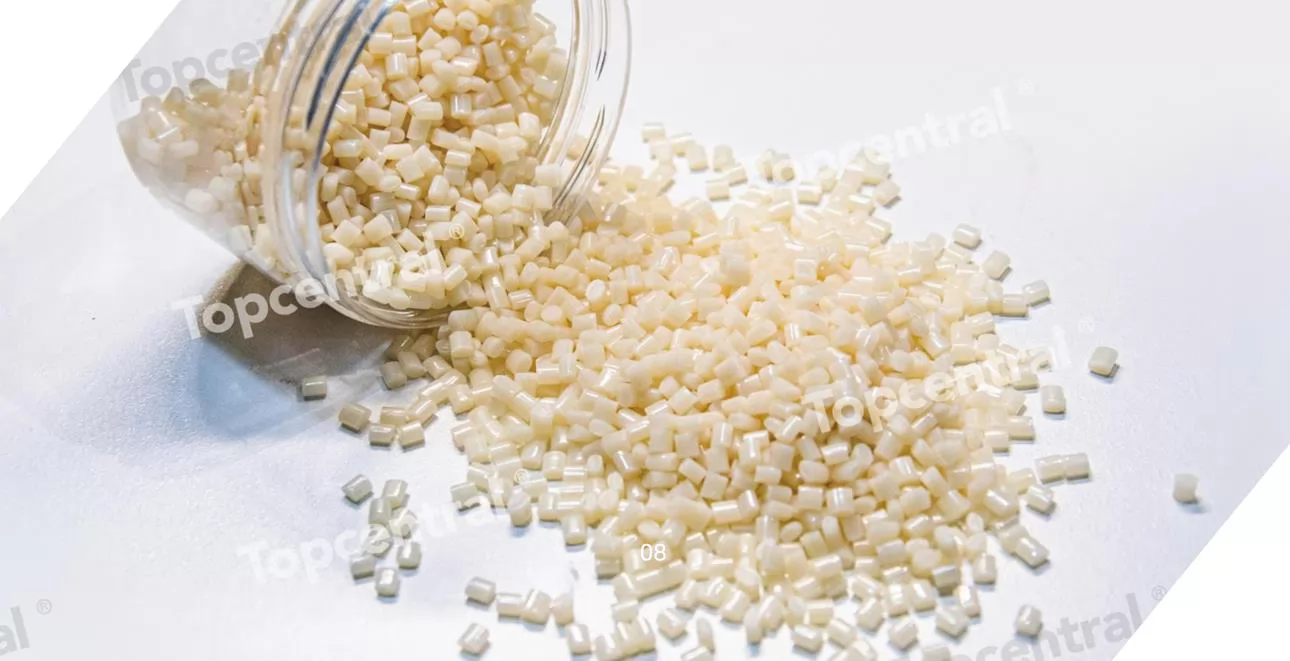
After compounding, the material is converted into recycled ABS pellets suitable for downstream processing. Quality control may include MFR, impact strength, thermal performance, appearance, recycled-content verification, and application-specific testing. The objective is therefore not simply to maximize recycled content. The finished rABS grade must provide consistent and measurable performance for the intended manufacturing process.
Recycling can change ABS because the polymer may experience additional heat, shear, oxidation, and processing cycles. Previous exposure to heat, UV radiation, chemicals, or mechanical stress can also influence the recovered material. The extent of these changes varies between recycling streams, so there is no universal percentage loss in mechanical performance that applies to every rABS grade.
MFR is one of the most useful processing indicators for recycled ABS. Changes in polymer structure and formulation can affect melt viscosity. Higher-flow materials may be useful for thin-wall or complex parts, while other grades may prioritize impact strength or dimensional performance.
Impact performance can be particularly sensitive to recycling history. Degradation, contamination, and formulation differences may reduce ductility or impact resistance, but engineered rABS can be formulated to achieve defined impact and mechanical targets.
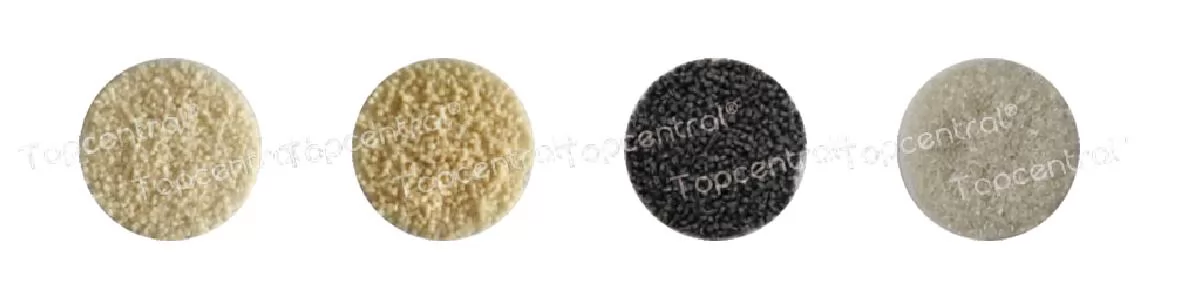
Color consistency can also be affected by recycling, as recovered ABS may contain pigments and additives from previous applications. Poorly controlled feedstock can result in color variation, visible impurities, or inconsistent surface quality.
Two materials described simply as “recycled ABS” can have very different properties. A controlled manufacturing scrap stream may be considerably more predictable than mixed post-consumer ABS recovered from different products.
The actual properties of rABS depend on the grade and formulation. Mechanical properties should be evaluated according to the finished product's requirements.
| Property | Why It Matters |
|---|---|
| Melt Flow Rate | Indicates flow behavior during processing |
| Impact Strength | Important for housings and impact-prone parts |
| Heat Deflection Temperature | Indicates resistance to elevated temperatures |
| Tensile/Flexural Performance | Relevant to structural applications |
| Color & Gloss | Important for visible components |
| Flame Rating | Required for selected electrical applications |
| Recycled Content | Supports circular-material objectives |
Thermal performance becomes particularly important for automotive, electrical, appliance, and industrial components exposed to elevated temperatures. MFR should also be considered together with wall thickness, mold design, injection speed, and processing conditions rather than as an isolated number.
The most useful way to compare rABS with virgin ABS is not to ask which material is universally “better,” but whether a specific recycled grade can meet the same application requirements.
| Factor | rABS | Virgin ABS |
|---|---|---|
| Feedstock | Recovered ABS | Newly produced resin |
| Composition | Depends on recycling stream and formulation | Generally more controlled |
| Consistency | Grade-dependent | Generally predictable |
| Recycled Content | Yes | No |
| Processing | Suitable for many ABS processes | Broad processing capability |
| Customization | Can be compounded | Broad commercial grades |
| Sustainability Value | Higher recycled-material content | Primarily based on resin efficiency |
In many applications, yes. If an rABS grade meets the required impact strength, flow behavior, heat resistance, appearance, flame performance, and compliance requirements, it can potentially replace virgin ABS. Qualification should nevertheless include actual molding trials and finished-part testing, particularly for components with demanding mechanical, thermal, or appearance specifications.
Virgin ABS may remain preferable where extremely tight material consistency or specific performance requirements cannot currently be achieved with an available recycled grade. The objective should therefore not be to eliminate virgin ABS from every application. Instead, manufacturers should identify where qualified rABS can deliver the required performance while increasing recycled content. If virgin-like consistency is strictly required, specially formulated recycled ABS compounds might offer the necessary bridge between sustainability and high-end performance.
Five factors are particularly important when evaluating an rABS supplier:
For B2B applications, consistent performance between batches can be just as important as the performance of a single sample.
rABS can be considered for interior components, housings, covers, trim-related parts, and other molded components. Depending on the application, requirements may include impact resistance, dimensional stability, heat resistance, appearance, and regulatory compliance.
Electronic housings, covers, control components, and similar parts can benefit from ABS's balance of rigidity, impact resistance, appearance, and processability. For electrical products, flame-retardant performance may also be required, so the specific grade and test rating must be verified.
Appliance housings and functional components often require good appearance, impact resistance, dimensional stability, and efficient injection molding. rABS can be attractive where these requirements can be met while increasing recycled content.
Other applications include office equipment, consumer products, industrial molded parts, and selected packaging-related components. The application determines the specification: there is no universal rABS grade suitable for every product.
Yes. Many rABS grades are designed for conventional thermoplastic processing, particularly injection molding. Topcentral's current product portfolio includes grades intended for injection molding, modification, and selected extrusion applications. Its general processing guidance includes drying at approximately 80–90°C for 2–4 hours, while injection and extrusion parameters vary according to the grade and equipment. These values should be treated as general guidance rather than universal processing conditions.
Before production, manufacturers should confirm MFR and flow requirements, drying conditions, recommended melt temperature, mold or extrusion conditions, part geometry and wall thickness, and finished-part performance requirements. Processing parameters for virgin ABS should not automatically be transferred to recycled ABS without validation.
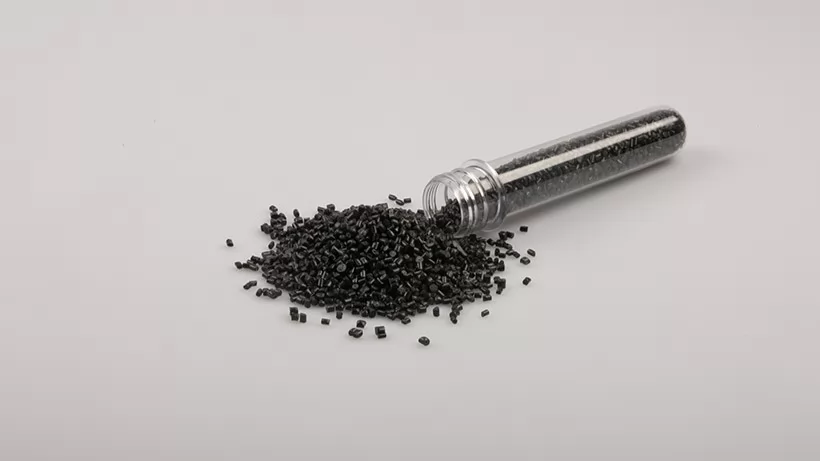
The selection process should begin with the finished product rather than the recycled-content percentage.
Certification requirements depend on the application and target market.
| Certification / Standard | Main Purpose |
|---|---|
| GRS | Recycled-material and chain-of-custody verification |
| ISCC PLUS | Supply-chain traceability and sustainability attributes |
| UL 2809 | Environmental and recycled-content claim framework |
| UL 94 | Flammability classification |
| EN 18064-7:2025 | Quality recommendations for ABS recyclates |
These should not be treated as substitutes for technical qualification. A certified recycled material still needs to meet the mechanical, thermal, processing, and appearance requirements of the finished product.
The sustainability advantage of rABS comes primarily from incorporating recovered material into new products and reducing reliance on virgin resin. However, sustainability should be evaluated together with performance. A recycled grade that fails to meet service requirements may create additional waste through premature replacement. The strongest business case is therefore to use qualified rABS where recycled content and required product performance can be achieved simultaneously.
Topcentral's IBISS® rABS portfolio includes general, functional, customized, and specialized recycled ABS grades for different manufacturing requirements. The current portfolio includes injection and selected extrusion grades with different MFR, impact, appearance, and certification profiles.
| Grade | MFR (g/10 min) | Notched Izod (kJ/m²) | Main Characteristic |
|---|---|---|---|
| rABS-NE115CG | 20–30 | ≥15 | High-gloss natural |
| rABS-N120E | 35–50 | ≥18 | High flowability, halogen-free |
| rABS-B108C | 20–35 | ≥8 | Black, impurity-point control |
The product pages identify GRS, ISCC PLUS, and/or UL2809 certification for these grades depending on the product, while applications include modification and injection molding.
rABS plastic is an engineered material category, not simply recycled ABS waste. Its performance depends on the quality of the recovered feedstock, contamination control, reprocessing history, formulation, and quality-control system.
For manufacturers, the best approach is to evaluate rABS on measurable application requirements. When a qualified grade can meet the required combination of impact performance, flowability, appearance, processability, and compliance, rABS can provide a practical route to increasing recycled content without automatically sacrificing product performance.
For companies evaluating recycled ABS for a new product or looking to replace part of their virgin ABS consumption, Topcentral can provide grade-specific technical information, samples, and customized recycled ABS solutions.
Get expert guidance and find the optimal grade for your specific application requirements.
Request a Material Consultation
Discover this amazing content and share it with your network!

The global recycled plastic industry is evolving rapidly in 2026. This guide profiles the top manufacturers leading the charge in PET, HDPE, and PP recycling technologies.

Learn how to select the right PCR PC material with this guide covering grades, performance, applications, certifications, and supplier evaluation for sustainable polycarbonate solutions.

This comprehensive guide explores rABS plastic (recycled Acrylonitrile Butadiene Styrene), detailing its manufacturing process, material properties, comparison with virgin ABS, key application requirements, and how manufacturers can select the ideal grade for sustainable injection molding.