/
/

Transitioning to sustainable materials in engineering applications rarely presents a straightforward choice. For manufacturers, plastic processors, and material engineers evaluating recycled PBT (polybutylene terephthalate), the core challenge is balancing corporate circularity targets with uncompromising functional demands. PBT is routinely specified for high-performance components requiring high dimensional stability, mechanical strength, thermal endurance, chemical resistance, and precise electrical insulation. Substituting virgin resin with recycled engineering plastics introduces valid engineering concerns regarding batch-to-batch consistency, thermal degradation history, molecular weight loss, and long-term mechanical performance under continuous operational stress.
Determining whether recycled PBT can realistically match virgin PBT requires evaluating specific application tolerances rather than accepting broad, unqualified equivalency claims. Performance depends on the origin and purity of the feedstock, reprocessing history, thermal shear exposure, and the precision of the compounding formulation. By examining structural property shifts, thermal and electrical behaviors, processing parameters, and quality control metrics, engineers and procurement managers can identify exactly where recycled PBT serves as a direct drop-in replacement, where performance gaps require modification, and how to rigorously qualify a grade before commencing full-scale production.
Navigate through key sections of this technical guide
Polybutylene terephthalate is a semi-crystalline engineering thermoplastic polyester valued for its rapid crystallization rate, high stiffness, resistance to chemical exposure, and excellent electrical properties. However, the recycling process subjects the polymer chain to mechanical shear, thermal stress, and potential environmental contamination, all of which alter its physical and processing behavior.
The transition from post-industrial or post-consumer PBT waste to high-performance recycled PBT pellets requires strict material management and processing controls. Post-industrial waste (PIR)—such as sprues, runners, edge trims, and off-spec molded parts—typically offers high chemical purity, known thermal history, and low contamination risks. Post-consumer waste (PCR PBT) originates from end-of-life electronics, appliances, or automotive assemblies. PCR feedstocks demand rigorous mechanical sorting, optical cleaning, washing, and decontamination procedures prior to melt reprocessing.
Once cleared of physical and polymeric contaminants, the raw feedstock is shredded, dried, melted, filtered, and re-extruded into uniform pellets. To achieve true engineering-grade performance, simple re-pelletization is rarely sufficient. Advanced compounding technology is required to incorporate functional additives—such as chain extenders, heat stabilizers, short glass fiber reinforcements, flame retardants, or elastomeric impact modifiers—transforming baseline recycled stock into consistent rPBT resin suitable for demanding injection molding operations.
The main distinction between virgin PBT resin and recycled PBT lies in molecular weight distribution and thermal history. Thermoplastics degrade slightly during every heat cycle through thermal-oxidative degradation and chain scission, which directly impacts intrinsic viscosity (IV) and melt flow behavior.
Polymer chain scission during thermal reprocessing lowers average molecular weight, resulting in a lower melt viscosity (higher melt flow rate). Uncontrolled viscosity shifts cause processing instabilities in injection molding, such as flash at mold parting lines, short shots, or unpredictable variations in mold shrinkage and part dimensions.
Like all polyesters, PBT is highly susceptible to hydrolytic degradation at elevated processing temperatures. If recycled feedstock or regrind is insufficiently dried prior to extrusion or molding, water molecules rapidly break the ester linkages in the polymer backbone. This severe degradation leads to a catastrophic loss of mechanical properties, particularly ductility and impact resistance.
Residual traces of cross-polymers (such as PET, PC, or polyolefins), residual flame retardants, or microscopic metallic particles act as stress concentration sites within the molded matrix. These contaminants significantly diminish impact strength, fatigue life, and dielectric reliability.
Thermal degradation during prior life cycles and re-processing can cause base polymer yellowing or color variance. While baseline color shifts are less critical for internal structural parts, they make tight color-matching in unpigmented, white, or light-colored grades difficult, often limiting recycled PBT to black or dark grey formulations.
Comparing virgin and recycled PBT requires evaluating functional engineering requirements against physical property trade-offs. Formulated recycled grades can fully match virgin specifications in specific application areas, but baseline, uncompounded recycled material typically exhibits slight reductions in peak performance metrics.
| Property / Characteristic | Virgin PBT | Unmodified Recycled PBT | High-Grade / Compounded Recycled PBT |
|---|---|---|---|
| Mechanical Strength | Maximum baseline tensile and flexural properties with tight statistical control. | 5% to 15% reduction in tensile and impact strength due to chain scission. | Equivalent to virgin performance via glass fiber reinforcement or impact modification. |
| Thermal Performance | Heat Deflection Temperature (HDT) up to ~200°C (30% glass-filled). | Minor reduction in HDT depending on filler retention and molecular weight. | Matches virgin HDT specs when properly formulated and reinforced. |
| Electrical Insulation | Highly consistent dielectric strength, volume resistivity, and CTI values. | Minor variations if microscopic ionic or conductive contaminants exist. | Meets strict IEC/UL standards when using screened feedstock and quality control. |
| Processing Behavior | Highly predictable melt viscosity and uniform crystallization kinetics. | Wider melt flow rate (MFR) variation between different material lots. | Stabilized MFR matching standard virgin processing windows. |
| Color Consistency | High baseline clarity; versatile for full-spectrum color matching. | Darker or variable base color; best suited for dark grey or black parts. | Highly consistent in black and dark shades; limited in light or vibrant tones. |
| Batch Consistency | Extremely narrow statistical tolerances across global production runs. | Highly dependent on feedstock sorting, source stability, and lot sizing. | Maintained via large-lot homogenization blending and tight QC protocols. |
| Recycled Content | 0% | Up to 100% | Tailored ratios (e.g., 20% to 50%+ PCR/PIR content formulations). |
Evaluating a recycled PBT material for a specific industrial component requires looking far beyond basic technical data sheets. Material specifiers, product developers, and engineers must analyze how key engineering properties shift, why those shifts occur, and how they affect the long-term structural integrity of the finished product.
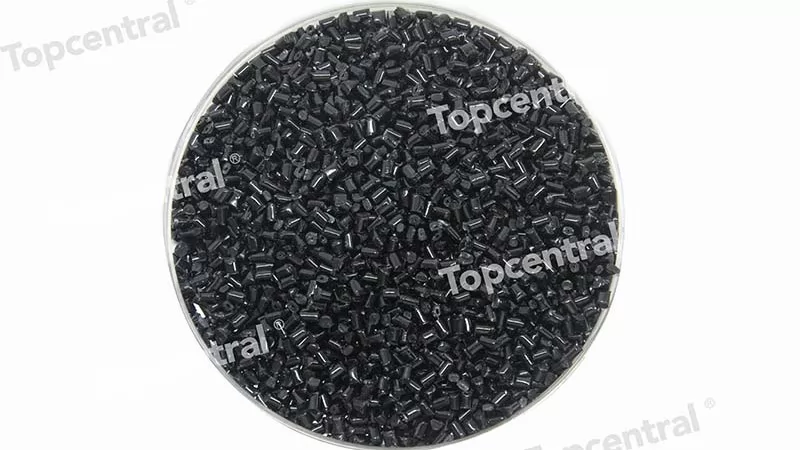
Pure virgin PBT is recognized for its combination of high tensile strength, flexural modulus, surface hardness, and mechanical toughness. In recycled grades, thermal shear and chain scission primarily affect ductility, elongation at break, and impact strength before significant drops in tensile modulus occur. Consequently, unreinforced rPBT may exhibit higher brittleness under sudden mechanical impact or dynamic loading conditions.
However, when PBT is reinforced with short glass fibers (such as 15%, 20%, or 30% glass-filled rPBT), the mechanical behavior of the composite is predominantly governed by the glass fiber loading, fiber aspect ratio, and fiber-matrix interfacial adhesion, rather than minor reductions in the matrix polymer's molecular weight. As a result, fully compounded, glass-reinforced recycled PBT grades frequently achieve complete mechanical equivalence—matching the tensile strength, flexural modulus, and fatigue endurance of corresponding virgin grades.
PBT is widely selected for elevated temperature environments due to its high crystalline melting point (~225°C), rapid crystallization kinetics, and structural resistance under load. Thermal performance, measured primarily via Heat Deflection Temperature (HDT under 1.8 MPa load) and Relative Thermal Index (RTI), remains largely stable in recycled PBT, provided the semi-crystalline morphology and degree of crystallinity are preserved during the injection molding cycle.
Long-term thermal aging characteristics, however, depend heavily on the additive formulation. Recycled formulations require effective primary (hindered phenols) and secondary (phosphites) antioxidants to prevent accelerated thermal-oxidative degradation during extended high-temperature exposure in end-use environments, such as automotive engine compartments or high-power industrial enclosures.
PBT is a benchmark material in high-voltage and high-insulation electrical applications due to its high Comparative Tracking Index (CTI), high volume resistivity, and strong dielectric breakdown strength.
Recycled PBT retains strong electrical insulation properties, provided the reprocessed feedstock is strictly screened and maintained free from conductive foreign particles, ionic residues, or degraded legacy flame-retardant additives. For safety-critical electrical connectors, terminal blocks, and switchgears, rigorous verification of CTI performance (often requiring CTI Performance Level Category PLC 0 or 1) and UL 94 flammability ratings (V-0, V-1, or V-2) is essential during the material qualification process.
Molecular weight reduction in recycled feedstock increases the Melt Flow Rate (MFR). While a higher melt flow can aid in filling thin-walled, highly complex mold geometries at lower injection pressures, it can also increase the risk of part flashing at parting lines, tool wear, and uneven volumetric shrinkage.
To offset excessive flow and restore melt strength, specialized compounding employs reactive chain extenders (such as multi-functional epoxy or anhydride additives) that re-link cleaved polymer chains during extrusion. Achieving consistent injection molding processing requires strict pre-drying protocols (typically dehumidified drying to a moisture content below 0.02% by weight) to prevent further hydrolytic degradation inside the injection molding barrel.
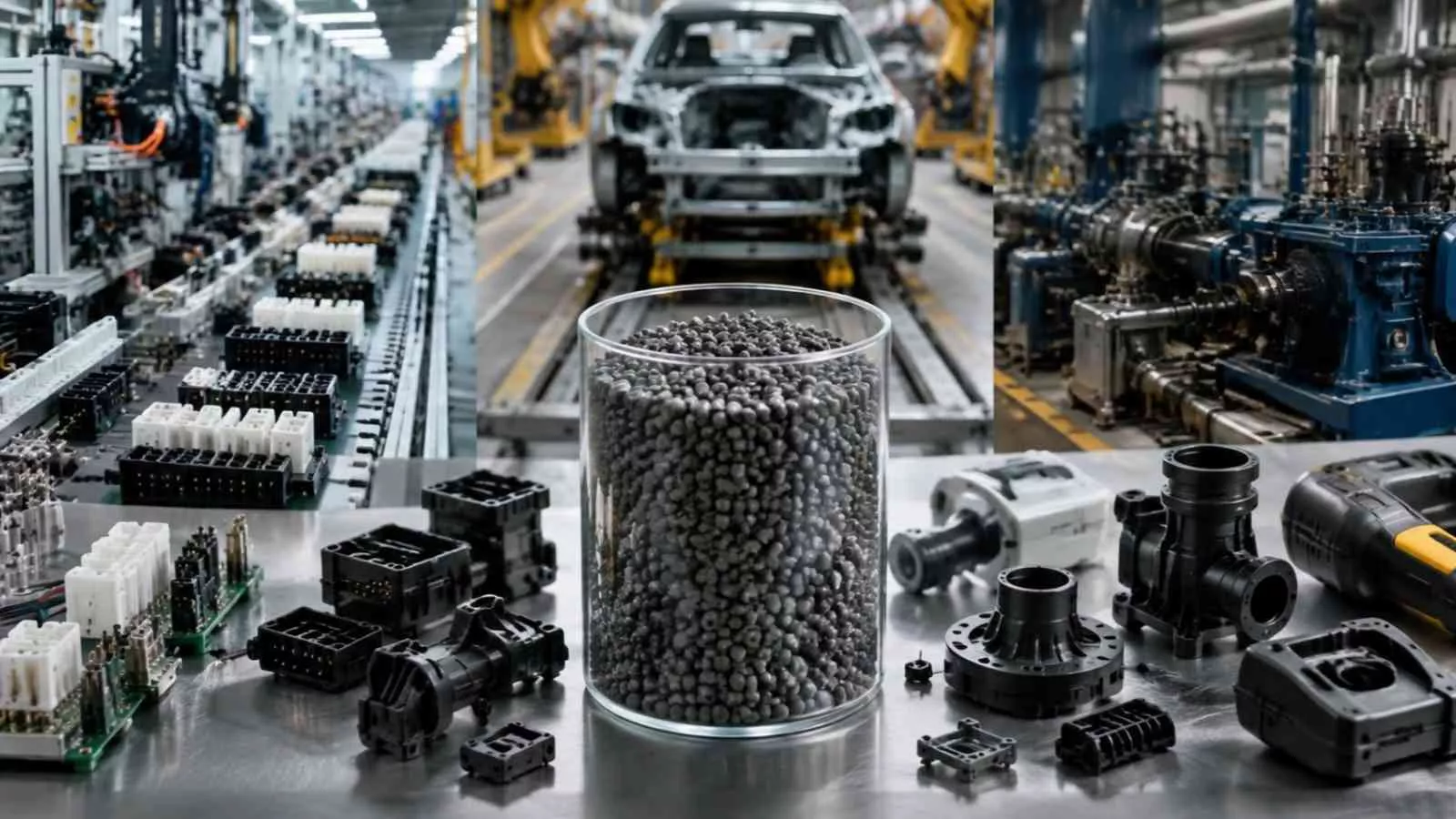
Recycled PBT can effectively replace virgin resin in demanding engineering applications, provided the selected material grade matches the operational stress, environmental exposure, temperature range, and regulatory compliance mandates of the finished component.
PBT's inherent flame retardancy, dimensional stability, and electrical isolation properties make it a dominant choice for E&E components.
For a detailed technical evaluation of high-performance connector requirements, review our analysis on recycled PBT applications in high-performance electrical connectors.
Automotive OEMs and Tier-1 suppliers increasingly specify recycled engineering thermoplastics to meet ambitious sustainability targets and lower lifecycle carbon emissions.
| Application Area | Typical Examples | Why Recycled PBT Is Suitable |
|---|---|---|
| Electrical & Electronics | Connector housings, terminal blocks, switch bases, relay covers | Delivers precise dimensional stability, flame retardancy, and high electrical insulation resistance. |
| Automotive | Sensor housings, wire harness clips, junction boxes, headlamp bezels | Provides heat deflection under load, fluid chemical resistance, and long-term mechanical strength. |
| Industrial Components | Pump impellers, valve bodies, power tool housings, equipment frames | Offers high wear resistance, structural stiffness, impact strength, and chemical durability. |
The performance gap between a low-grade, uncontrolled regrind and a high-performance recycled PBT engineering resin comes down to processing controls, feedstock sourcing, and compounding chemistry.
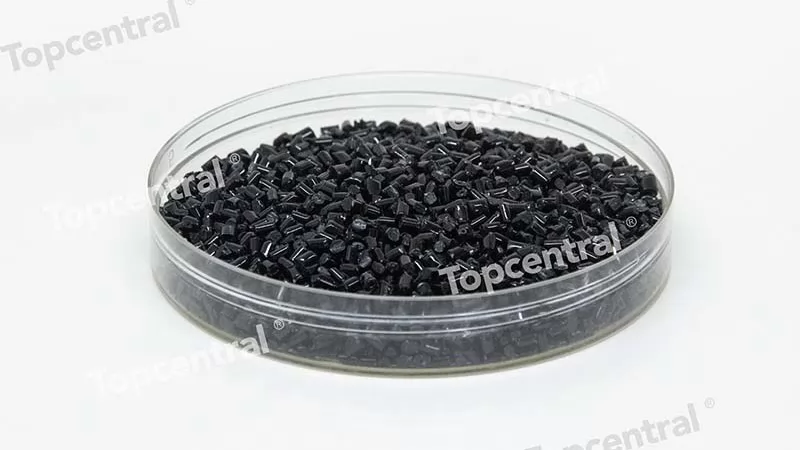
The mechanical limits of the final pellet are determined by the quality of the initial scrap stream. Monostream post-industrial scrap delivers higher purity, predictable intrinsic viscosity, and minimal contamination compared to mixed post-consumer waste streams. Robust supplier quality systems ensure incoming scrap lots undergo continuous screening for moisture, melt flow rate, ash content, and cross-polymer contamination before entering the compounding production line.
Raw recycled PBT rarely acts as a direct substitute for virgin resin without precise re-formulation. High-performance compounding utilizes co-rotating twin-screw extruders to incorporate functional additives into the melt:
For applications demanding custom mechanical, flame-retardant, or thermal properties, working with engineered recycled plastic compounds ensures the reprocessed resin meets exact engineering specifications.
Industrial buyers should verify that their recycled PBT supplier subjects every manufacturing lot to comprehensive quality testing against international standard benchmarks:
To support legitimate corporate sustainability claims and regulatory mandates, recycled engineering materials require transparent, third-party verified chain-of-custody documentation:
In many industrial applications, yes—but material replacement depends on matching the specific physical and chemical requirements of the application rather than assuming universal, automatic equivalency across all grades.
Engineers and procurement teams typically approach material replacement through three practical strategy pathways:
For components with moderate mechanical demands, standard dimensional tolerances, and dark color specifications (such as black industrial handles or internal mounting clips), a fully compounded, high-grade recycled PBT can directly replace virgin PBT. Molding parameters (barrel temperature profiles, injection speeds, mold temperatures, and holding pressures) usually require only minor optimization adjustments.
When the target component involves high mechanical loads, dynamic vibration, elevated thermal exposure, or strict UL 94 V-0 flammability ratings, baseline recycled PBT may fall short without custom formulation. In these scenarios, material compounders engineer custom rPBT grades using specialized glass fiber reinforcement packages, non-halogenated flame retardants, or elastomeric impact modifiers to achieve target performance profiles identical to specified virgin materials.
For safety-critical components or parts with extremely tight optical, dimensional, or mechanical tolerances, material engineers often utilize a hybrid blending strategy. Compounding a controlled ratio of high-purity recycled content (e.g., 20% to 50% PCR/PIR) into a virgin PBT matrix allows manufacturers to achieve meaningful sustainability goals and reduce product carbon footprints while maintaining ultra-tight process controls and complete property stability.
Evaluating recycled PBT on objective technical parameters—rather than relying on generic sustainability claims—highlights the importance of a material supplier's compounding expertise, laboratory capabilities, and quality control infrastructure.
Topcentral specializes in engineered recycled plastics, developing tailored material solutions for demanding global industrial applications. By combining high-purity post-industrial and post-consumer feedstocks with precise twin-screw compounding technologies, Topcentral produces consistent, high-grade rPBT formulations designed to meet exact functional specifications in electrical, automotive, appliance, and industrial components.
Our material portfolio includes a broad range of engineered recycled plastic pellets optimized for stable processing behavior and consistent mechanical output:
Formulated for smooth surface finish, high dielectric strength, and low melt viscosity in thin-walled electrical housings, connectors, and switch bases.
Engineering PlasticAvailable in 15%, 20%, 30%, and custom glass-filled loadings, delivering structural stiffness, high heat deflection temperatures (HDT), and dimensional stability that directly match traditional virgin PBT grades.
Engineering PlasticEngineered to satisfy UL 94 V-0 flammability standards and elevated Izod impact requirements for high-stress electrical and automotive under-hood assemblies.
Engineering PlasticTopcentral operates under comprehensive quality management frameworks, incorporating lot-by-lot melt flow index testing, mechanical property verification, ash content analysis, and full chain-of-custody certification (including GRS options). Rather than supplying off-the-shelf regrinds, Topcentral collaborates directly with material engineers, product designers, and procurement managers to customize formulations, align melt characteristics with existing tooling, and validate material performance through rigorous pre-production trial sampling.
Recycled PBT can realistically match the performance required from virgin PBT, provided the specific grade is engineered, formulated, and qualified for the actual operational demands of the application. While unrefined, poorly sorted regrinds introduce significant risks regarding melt viscosity fluctuations, impact strength loss, and batch-to-batch variation, fully compounded and modified rPBT resins deliver the mechanical rigidity, heat deflection, chemical resistance, and electrical insulation required for high-integrity engineering components. Achieving seamless material replacement depends on feedstock purity, advanced compounding technology, and continuous lot-to-lot testing.
For manufacturers, plastic processors, and procurement teams evaluating recycled engineering plastics, successful material adoption relies on rigorous technical validation. Topcentral provides specialized rPBT material formulations, comprehensive technical data sheets, and evaluation samples to help engineering teams verify processing windows, confirm property specifications, and achieve ambitious corporate sustainability objectives without compromising end-product reliability.
Contact Topcentral's material engineering team for technical data sheets, sample formulations, and application-specific consultation.
Contact us
Discover this amazing content and share it with your network!

The global recycled plastic industry is evolving rapidly in 2026. This guide profiles the top manufacturers leading the charge in PET, HDPE, and PP recycling technologies.

Discover how Topcentral® transforms plastic waste into high-value recycled materials through PCR solutions, ocean circular innovation, traceability, and carbon management technologies.

Material Week Japan 2026, recycled plastic materials, PCR recycled materials, sustainable materials, recycled plastic manufacturer